Planning a church retreat requires careful coordination across multiple areas, from finding the right location to organizing meals and sessions. Without proper planning, even well-intentioned retreats can fall short of creating the transformative experiences participants hope for.
This guide walks through the essential steps for planning a successful religious retreat, with particular attention to church retreat transportation and other logistics that help your group arrive ready to focus on spiritual growth.
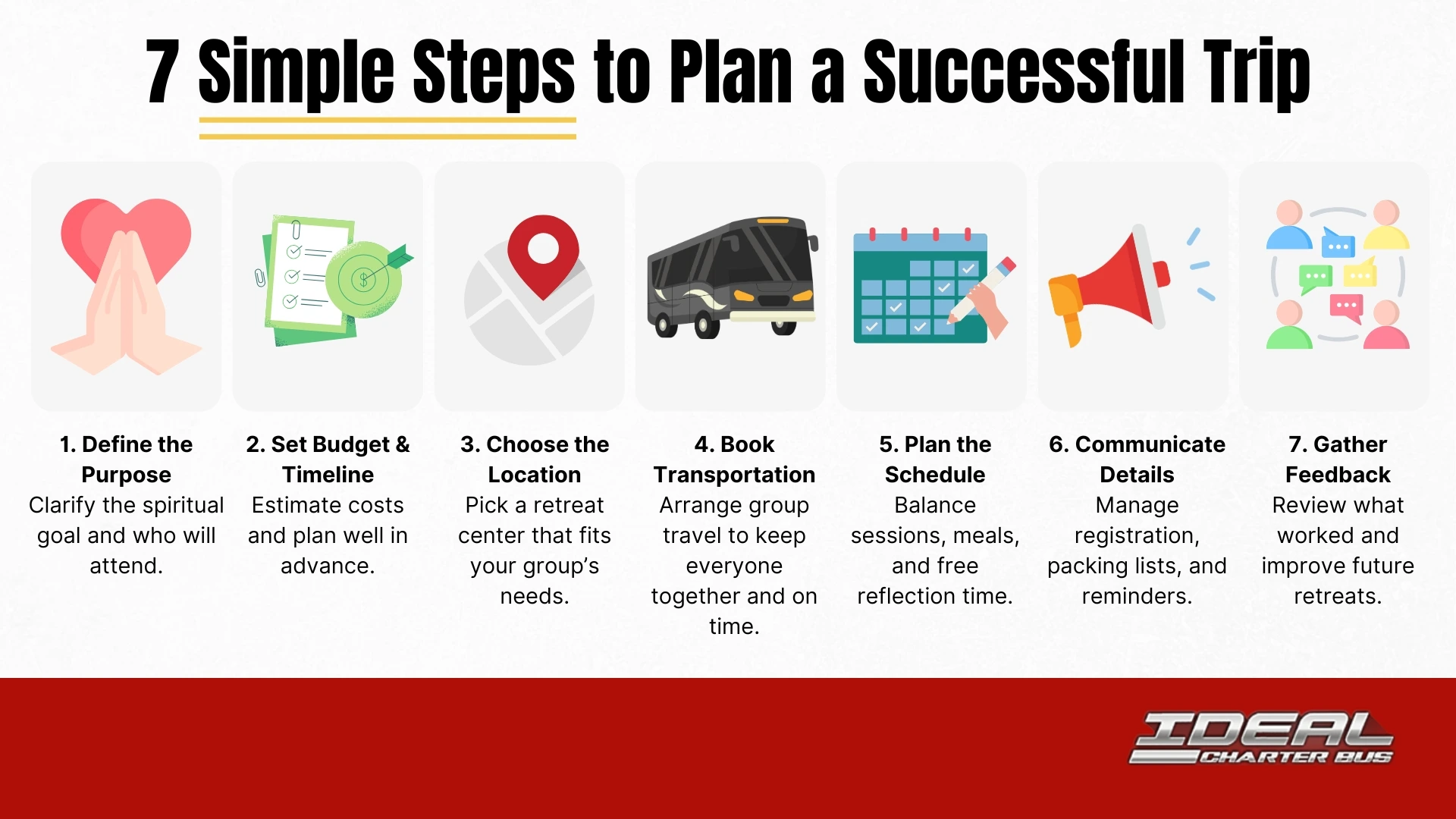
Step 1: Define Your Retreat Purpose and Participants
Every successful retreat starts with a clear understanding of why you're gathering and who will attend. This foundation shapes every decision that follows, from the location you choose to the transportation arrangements you make.
Identify Your Spiritual Focus
Your retreat needs a central theme that guides sessions, discussions, and activities. Consider what your church group needs most right now — whether that's rest from daily life, deeper prayer experiences, or exploring specific aspects of faith.
Determine Your Target Audience and Group Size
Different groups within your church family have different needs and constraints. Think about age ranges, mobility considerations, and family situations when planning retreat bookings, as these factors directly impact venue selection and transportation needs. Your group size also determines what type of group transportation makes the most sense for keeping everyone together.
Step 2: Budget Planning and Set Your Timeline
Financial planning and scheduling determine what's possible for your retreat and help avoid surprises that could derail your plans.
Calculate Total Costs and Set Fees

Planning a religious retreat requires careful attention to multiple expense categories to ensure you stay within budget while creating a meaningful experience for participants.
Consider these essential budget items when planning your church retreat:
- Venue rental: Research retreat center costs for your group size, including any additional fees for meeting spaces or special amenities.
- Meals and catering: Factor in dietary restrictions and the number of meals provided, whether through the venue or external catering.
- Transportation: Charter bus services typically represent a significant expense, so get quotes early and book in advance for better rates.
- Materials and supplies: Budget for discussion guides, name tags, craft supplies, audio-visual equipment, and any handouts needed for sessions.
- Contingency funds: Set aside 10-15% of your total budget for unexpected costs or last-minute adjustments.
Decide how much to charge each person attending and establish a registration deadline far enough in advance to finalize counts with vendors.
Create Your Planning Timeline
Starting your retreat planning at least three to four months in advance gives you enough time to secure the best venues, book transportation, and communicate effectively with participants. This timeline also allows retreat goers to arrange time off work, similar to how you would plan a group trip for any major gathering.
Step 3: Choose the Right Location and Arrange Transportation
The retreat location significantly impacts the overall experience, and how your group gets there sets the tone for the entire gathering.
Select an Appropriate Retreat Center
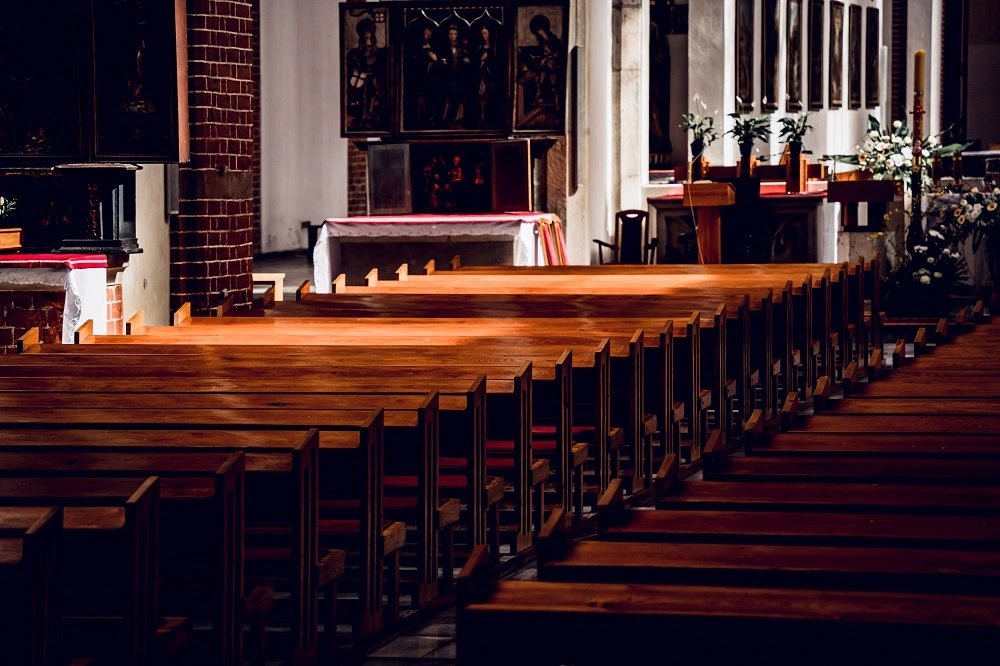
Look for venues that match your group size and retreat style. Some retreat centers specialize in faith-based gatherings and offer chapels, prayer spaces, and quiet areas for reflection.
Consider these essential factors when evaluating retreat locations:
- Sleeping accommodations: Check room capacity, bed types, and whether bathrooms are private or shared to ensure comfort for all church members.
- Meeting spaces: Ensure there are rooms suitable for worship, presentations, and breakout sessions that can accommodate your entire group.
- Meal facilities: Confirm the kitchen can handle your group's dietary needs and preferences.
- Outdoor areas: Access to nature enhances many retreat experiences and provides space for walks and prayer.
The location should be far enough from home to feel like a genuine break from daily life, but not so distant that travel becomes exhausting.
Organize Professional Transportation
Getting your entire group to the retreat location safely and comfortably requires advance planning. Professional charter bus services eliminate the stress of convoy driving and ensure everyone arrives at the same time while allowing travel time to become part of the retreat experience.
Choose the right vehicle size for your church group:
- 14-passenger vans: Perfect for small leadership teams or intimate retreat groups traveling to nearby retreat centers.
- 22-passenger minibuses: Ideal for mid-sized church groups, offering comfortable seating and climate control for journeys up to a few hours.
- 39-passenger executive coaches: Excellent for larger congregations, featuring amenities like Wi-Fi and onboard restrooms for longer trips.
- 56-passenger motor coaches: Best for church-wide retreats, providing maximum capacity with premium comfort features and ample luggage storage.
When planning church retreat transportation, book vehicles well in advance and provide the company with accurate pickup locations, timing, and any special requests. If you're using shuttle services for local pickups, coordinate timing carefully to ensure smooth transitions. Many churches discover the benefits of church bus rental extend beyond simple logistics to enhance the entire retreat experience.
Step 4: Plan the Retreat Schedule and Activities
The retreat schedule should balance structured activities with free time for rest and personal reflection, creating space for both community connection and individual spiritual growth.
Design a Balanced Agenda
Create a flow that mixes large group worship, teaching sessions, small group discussions, and individual quiet time. Most retreats benefit from starting with community-building activities that help participants relax and connect. Schedule demanding sessions earlier in the day when people are fresh, and build in breaks between sessions so people can process what they're learning.
Incorporate Meals and Free Time
Meals offer valuable space for informal conversation and relationship building, so try to have at least one meal that's relaxed and unhurried. Schedule blocks of free time where participants can walk outside, journal, or sit quietly, as these unstructured moments often become the most meaningful parts of a retreat.
Step 5: Handle Registration and Communication
Effective communication before the retreat helps participants prepare and reduces last-minute confusion, ensuring everyone arrives ready to engage fully.
Set Up Registration and Communicate Details

Create a simple way for people to sign up and pay, collecting essential information like dietary restrictions, roommate preferences, and emergency contacts. About two weeks before the event, send a comprehensive email with everything participants need to know.
Provide a packing list that covers these essential items:
- Comfortable clothes: Include layers for varying temperatures and walking shoes for outdoor time.
- Personal items: Toiletries, medications, and anything needed for individual comfort.
- Spiritual materials: Bible, journal, pen, and any books related to the retreat focus.
- Bedding: Confirm whether the venue provides linens or if participants need sleeping bags.
Send a final reminder 2-3 days before the retreat with departure details and emergency contact numbers.
Prepare Your Travel Schedule
Create a detailed travel schedule mapping out departure times, rest stops, and arrival at the retreat center. Build in buffer time for unexpected delays and coordinate arrival to give people a few minutes to settle in, similar to how you'd plan wedding transportation for time-sensitive events.
Step 6: Execute and Facilitate the Retreat
Once the retreat begins, your role shifts from planning to facilitating and being present with participants as they engage in the spiritual experience you've created.
Arrive Early and Stay Flexible
Get to the retreat center several hours before participants arrive to check in with venue staff, set up meeting spaces, and handle any last-minute issues. Even with careful planning, adjustments happen — build flexibility into the schedule and be willing to adapt.
Encourage Participation and Practice Self-Care

Help participants engage by modeling enthusiasm and openness, making sure everyone has a chance to speak during small group time. As a retreat leader, remember that you need rest too — build in short breaks and consider having a co-leader who can share responsibilities.
Step 7: Gather Feedback and Plan Ahead
The work doesn't end when participants return home. Evaluation helps improve future events and measures whether you met your goals.
Collect and Review Feedback
Send a brief survey within a few days of the retreat's end asking what people found most valuable and what could be improved. Meet with everyone who helped plan and lead the retreat to discuss what worked well and document lessons learned.
Continue Planning Future Retreats
Many churches find annual retreats become anticipated traditions that strengthen community over time, similar to how corporate events or school trips build organizational culture. Use what you learned to make each retreat better than the last.
Make Your Next Church Retreat Transportation Seamless
Planning a successful religious retreat involves coordinating numerous details, from selecting the perfect location to creating a schedule that balances worship, teaching, and rest. Transportation stands out as one area where professional help makes a significant difference.
Ideal Charter Bus offers Chicago charter bus rentals designed specifically for church groups and religious organizations. Our fleet accommodates groups of any size, and our experienced drivers understand the unique needs of faith-based travel. Contact us today to discuss transportation for your next church retreat.
Ready to Book Your Church Retreat Transportation?
Let us handle the driving while you focus on creating a meaningful spiritual experience. Serving the greater Chicago area with reliable, comfortable group transportation.